Ever looked at a family photo and noticed how certain traits just seem to run in the family, or how our experiences shape us? It makes you wonder how deep those changes go, right?
Long before our modern understanding of genetics, a brilliant mind named Jean-Baptiste Lamarck pondered similar questions, proposing some truly groundbreaking ideas about how species evolve.
While his theories about the inheritance of acquired characteristics were once largely dismissed, science has a funny way of coming full circle, and some of his core insights are actually experiencing a surprising resurgence in today’s cutting-edge research.
It really makes you think about the incredible journey of life and scientific discovery. Let’s dive deeper into Lamarck’s vision and uncover why his legacy is more relevant than ever.
The Echoes of Ancestral Efforts

You know, sometimes I look around at my own family, or even just observe people out in the world, and it really gets me thinking about how much we carry with us from previous generations. It’s not just the obvious things like eye color or a knack for painting, but sometimes you see patterns in health, or even how people react to stress, that just seem to run deeper than just learned behaviors. For the longest time, science has told us it’s all in the genes, and sure, DNA is a huge part of the puzzle. But what if our ancestors’ actual experiences – their struggles, their triumphs, even their environment – left a more direct, indelible mark on us than we ever imagined? It makes you wonder if that old saying, “the sins of the father,” or more positively, “the strengths of the mother,” holds more biological truth than just metaphorical wisdom. It’s a fascinating thought, especially when you start to connect it to the more recent discoveries in how our bodies function, reminding us that life’s story is far more intricate than a simple genetic blueprint.
When Our Bodies Tell a Story
Think about those stories from your grandparents or great-grandparents. Perhaps they lived through tough times, like the Great Depression, or served in a war. We often hear how those experiences shaped *them*, but what if those profound life events didn’t just alter their personalities, but actually influenced their biology in a way that could be passed down? I’ve seen some studies that suggest trauma in one generation can literally change the stress response in subsequent ones, almost like the body itself remembers and prepares for hardship. It’s not about changing the actual DNA code, which is what we traditionally think of as genetic inheritance, but rather how that code is expressed. It’s as if the body develops a sort of ‘memory’ of past challenges, a silent adaptation that whispers across the generations, influencing how we interact with the world today without us even realizing it.
A Legacy Beyond Genes
We often talk about “good genes” or “bad genes,” as if our fate is entirely sealed by the double helix. But what if lifestyle choices, dietary habits, or even exposure to certain environments during our parents’ and grandparents’ lives had a subtle, yet powerful, effect on our own predispositions? Imagine if your grandmother’s diet during pregnancy, or your grandfather’s exposure to certain toxins, could subtly tune the way your own genes behave. This isn’t science fiction; it’s actually a burgeoning field of study that’s causing scientists to rethink how inheritance truly works. It feels incredibly personal, almost like our ancestors are sending us coded messages about their lives, not through ancient texts, but through the very fabric of our being, shaping our resilience and vulnerabilities in ways we are only just beginning to understand.
When Scientific Tides Shifted
For a long time, if you even hinted that acquired characteristics could be inherited, you’d probably get a collective eye-roll from the scientific community. Darwin’s theory of natural selection, with its emphasis on random variation and the survival of the fittest, completely dominated the conversation, and for good reason! It offered such an elegant and powerful explanation for the diversity of life on Earth. The idea that a giraffe’s long neck developed because its ancestors stretched theirs to reach high leaves, and then passed that stretched neck directly to its offspring, just didn’t fit with the emerging understanding of genetics. Mendelian inheritance, which showed traits passed on in discrete, predictable units, seemed to firmly shut the door on any notion that an organism’s life experiences could somehow reprogram its reproductive cells. It felt like a settled debate, a chapter closed in the history of science, and anything suggesting otherwise was quickly relegated to the dusty archives of discredited theories. It’s a testament to how strongly a prevailing paradigm can influence scientific thought for centuries.
The Triumph of Natural Selection
When Darwin published “On the Origin of Species,” it was a seismic event in science. His meticulously observed evidence and logical arguments for natural selection offered a mechanism for evolution that made incredible sense. Traits that conferred an advantage in a particular environment were more likely to lead to survival and reproduction, and thus those advantageous traits would become more common in subsequent generations. This process didn’t require any mystical transfer of acquired traits; it simply relied on existing variation within a population and differential survival. It was a powerful, testable hypothesis that stood up to scrutiny, and it felt like we finally had a solid framework for understanding how life evolves. Honestly, it was a game-changer, pushing aside older, less robust theories and ushering in a new era of biological understanding.
A Century of Skepticism
For over a hundred years, the scientific world largely viewed the idea of inheriting acquired traits with a healthy dose of skepticism, if not outright dismissal. Genetics, as it developed through the 20th century, focused almost exclusively on DNA sequences as the carriers of hereditary information. The central dogma of molecular biology—that information flows from DNA to RNA to protein, but not in reverse—further solidified the belief that changes acquired during an organism’s lifetime simply couldn’t alter its germline DNA in a way that would be passed on. It seemed so logical, so clean, and it explained so much. To even suggest that something like a skill learned or a muscle developed could be inherited felt like a step backward into pre-scientific superstitions, making it difficult for anyone to seriously revisit those earlier, seemingly debunked ideas.
The Curious Case of Inherited Experience
You know how sometimes you pick up a new hobby, and after a while, you start seeing improvements, like your muscles getting stronger or your brain getting quicker at solving puzzles? Lamarck’s ideas, in a nutshell, were about what if those improvements, those adaptations you *acquire* during your lifetime, could then be passed directly to your kids? It sounds a little far-fetched now, doesn’t it? But back in his day, before we understood genes and DNA, it wasn’t such a wild thought. He looked at nature and saw things that seemed to make perfect sense through this lens. Take, for example, the classic image of the blacksmith’s powerful arm. Lamarck might have suggested that a blacksmith, through years of arduous work, develops exceptionally strong arm muscles, and then those stronger arm muscles are somehow passed down to his children, giving them a head start in strength. It’s an intriguing thought experiment, playing with the idea that our personal narrative, our journey through life, leaves a direct biological imprint on the next generation.
Stretching the Imagination
The classic example, and perhaps the one most unfairly used to discredit him, involves giraffes. Lamarck envisioned a scenario where short-necked giraffes, straining to reach leaves on tall trees, would slightly stretch their necks over their lifetime. These slightly longer necks, he theorized, would then be passed on to their offspring, who would then stretch their necks further, and so on, over many generations, leading to the long-necked giraffes we see today. It’s a very direct, almost intuitive explanation if you don’t know about genes or natural selection. For a long time, this was held up as an example of a fundamentally flawed understanding of biology, but when you strip away the modern scientific lens, you can appreciate the observation he was making about adaptation and how species seem to change over time in response to their environment.
Beyond Simple Adaptations
Lamarck’s thinking wasn’t just limited to physical traits. He also considered how disuse might lead to the disappearance of organs, like the eyes of cave-dwelling animals that no longer need to see. The underlying principle was that an organism’s interaction with its environment throughout its life could directly modify its form and function, and these modifications were then faithfully transmitted to its progeny. It was a comprehensive theory that attempted to explain all forms of biological change and adaptation. While we now understand the mechanisms of inheritance much differently, the core idea that an organism’s experiences might somehow influence its offspring is a concept that has, in a fascinating twist, found new life in modern scientific discourse, albeit through very different pathways than Lamarck could have ever imagined.
Unraveling Nature’s Secrets: Beyond the Blueprint
For decades, pretty much every biology textbook taught us that DNA was the undisputed king, the master blueprint, the ultimate decider of who we are and what we become. It was all about the genes, right? Mutations, recombination, and natural selection working on those genetic variations – that was the whole story. And honestly, it’s a compelling narrative. The discovery of the double helix, cracking the genetic code, the Human Genome Project… these were monumental achievements that reshaped our understanding of life itself. We started to feel like if we could just read the entire genetic sequence, we’d have all the answers. It was almost intoxicating, this idea that everything about us, from our health predispositions to our personalities, was pre-programmed in that intricate string of A’s, T’s, C’s, and G’s. It felt like the definitive answer to the age-old question of nature versus nurture, firmly tipping the scales toward nature, with nurture playing a secondary, perhaps even superficial, role. It created a powerful, almost deterministic, view of biology.
The DNA Revolution
The mid-20th century really kicked off what many called the DNA revolution. Suddenly, scientists had a clear understanding of how genetic information was stored and replicated. This knowledge opened up entirely new fields of study, from genetic engineering to personalized medicine. We learned how specific genes could cause diseases, how traits were inherited, and how evolution worked at a molecular level. It was thrilling to think that we were finally understanding the fundamental building blocks of life. For me, growing up learning about all this, it felt like such a complete and elegant explanation. It seemed to perfectly answer so many questions about heredity and biological diversity, making it incredibly hard to imagine any other significant mechanisms at play.
More Than Just the Code
However, as we delved deeper into the intricacies of genetics, particularly after the Human Genome Project, a new set of questions began to emerge. We found that simply knowing the DNA sequence wasn’t always enough to explain complex traits or diseases. Identical twins, with identical DNA, could sometimes have different health outcomes or even different personalities. Why? What was happening beyond the sequence itself? It was like having a perfect recipe book but realizing that how you *interpret* and *use* that recipe can profoundly change the final dish. This growing awareness hinted that there was a whole other layer of biological regulation, a sophisticated control system that decided *when* and *how* genes were expressed, that we were only just beginning to uncover. It meant that the story of inheritance was far more nuanced and dynamic than the static blueprint we had long imagined.
Modern Science’s Nod to Ancient Ideas
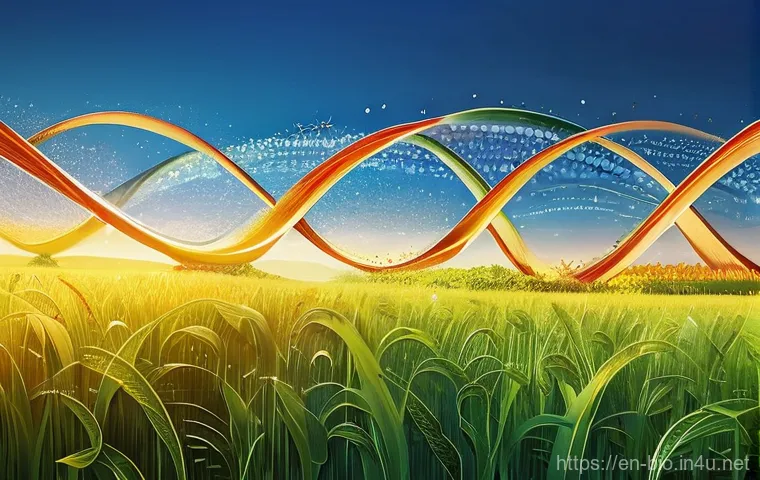
Now, here’s where things get really fascinating, and where science truly has a way of circling back. Just when we thought we had it all figured out with DNA as the be-all and end-all, a new field called epigenetics started to gain serious traction. And guess what? Some of its core findings resonate eerily with some of those “discredited” ideas from centuries ago. It’s like we’ve found a sophisticated dimmer switch for our genes, one that can be influenced by our experiences and even, in some cases, passed down. This isn’t about changing the letters of our genetic code, but rather about modifications *on top of* the DNA that dictate whether a gene is turned “on” or “off,” or expressed strongly or weakly. It’s a revolutionary concept that adds a whole new dimension to inheritance, suggesting that our lifestyle, our environment, and even our emotional states can leave marks on our genome that affect how it behaves, not just in us, but potentially in our children and grandchildren too. It’s a truly humbling reminder that the universe, and indeed our own biology, often holds more secrets than our current understanding can encompass.
The Epigenetic Twist
Epigenetics literally means “on top of genetics.” It’s the study of heritable changes in gene expression that occur without a change in the underlying DNA sequence. Think of it like this: your DNA is the script of a play, but epigenetic marks are like stage directions, lighting cues, and actor choices that determine how that script is performed. Diet, stress, exposure to toxins, even social interactions can all lead to these epigenetic modifications. What’s truly mind-blowing is that some of these epigenetic “tags” can be passed down through generations. So, while a giraffe’s neck doesn’t get longer because its parents stretched, a parent’s experience of famine, for instance, might leave an epigenetic mark that affects their child’s metabolism, preparing them for scarcity. It’s not a direct inheritance of an acquired physical trait, but an inheritance of an acquired *regulatory program* that influences how traits are expressed.
Lifestyle’s Lasting Imprint
This understanding completely reshapes how we think about the impact of our everyday choices. It’s not just about our own health; it’s about the potential legacy we leave for future generations. If you lead a healthy lifestyle, manage stress, and eat well, you might not just be benefiting yourself, but also subtly influencing the epigenetic landscape that your children and even grandchildren will inherit. Conversely, poor lifestyle choices could potentially leave negative epigenetic marks. It makes personal responsibility feel even more profound, doesn’t it? I mean, who wouldn’t want to give their descendants the best possible start, not just genetically, but epigenetically as well? It truly underscores the interconnectedness of life across time, reminding us that our present actions ripple into the future in ways we are only now starting to fully appreciate.
The Dynamic Dance of Genes and Environment
If you’ve ever felt like your environment, your diet, or even the stress of your daily life has a tangible impact on your well-being, you’re absolutely right. But what we’re learning now is that these influences don’t just affect *us*; they can actually fine-tune our genes in subtle ways, and some of those adjustments can stick around. It’s not about permanently rewriting our genetic code, which remains steadfast, but more about how our genes are read and interpreted. Think of it like a musical score: the notes themselves are fixed (our DNA), but how the conductor (our environment) interprets those notes—the tempo, the dynamics, the emphasis—can drastically change the performance (our health and traits). This dynamic interplay means we’re not just passive recipients of our genetic inheritance; we’re active participants in shaping how that inheritance unfolds, both for ourselves and for those who come after us. It brings a whole new level of nuance to the nature vs. nurture debate, essentially saying that nature and nurture are constantly engaged in a profound, lifelong, and even transgenerational dialogue.
What We Eat, Who We Are
One of the most compelling areas where this gene-environment dance plays out is in our diet. We all know that what we eat affects our health, but epigenetic research is showing us just how deeply. Certain nutrients, or the lack thereof, can act as epigenetic modifiers, essentially adding or removing those molecular tags on our DNA. For example, studies have shown that maternal diet during pregnancy can have lasting epigenetic effects on the offspring’s metabolism, impacting their risk for conditions like obesity or diabetes later in life. It’s not just about getting enough calories, but about the specific micronutrients and compounds that influence this intricate genomic orchestration. It makes those healthy eating choices feel even more critical, almost like you’re not just feeding yourself, but actively contributing to the biological well-being of future generations. It’s a powerful and slightly intimidating thought when you stop to consider it.
Stress, Scars, and Subsequent Generations
It’s not just physical inputs like food that can leave epigenetic marks; psychological and social factors can too. Stress, especially chronic or severe trauma, has been shown to induce epigenetic changes that alter stress response pathways. What’s truly profound, and frankly a bit sobering, is that some research suggests these stress-induced epigenetic marks can be passed down. Think about populations that have experienced famine, war, or genocide – there’s growing evidence that descendants of these groups may exhibit altered stress responses or metabolic profiles, almost as if their bodies are epigenetically “remembering” the hardships of their ancestors. This isn’t about blaming anyone; it’s about understanding the deep, intergenerational impact of our collective human experience and how our bodies adapt, sometimes subtly and sometimes profoundly, to the world around us. It paints a picture of humanity where our shared history isn’t just written in books, but etched into our very biology.
Practical Applications: Learning from the Past, Shaping the Future
So, what does all this mean for us, right here and now? It’s not just fascinating scientific theory; it has very real, tangible implications for how we approach health, wellness, and even public policy. Understanding that our choices today can have epigenetic repercussions for our children and grandchildren transforms our perspective on preventative care and lifestyle. It gives us an even stronger incentive to live healthier lives, not just for ourselves, but as a legacy for those who follow. Imagine the impact on public health initiatives if we could identify specific environmental factors or dietary patterns that leave detrimental epigenetic marks and then mitigate them. It’s about leveraging this deeper understanding of biology to foster healthier communities and more resilient future generations. It’s a powerful tool, really, empowering us to think beyond our immediate lifespan and consider our role in a much larger, intergenerational biological tapestry.
From Lab Bench to Living Room
The beauty of these discoveries is how they bridge the gap between complex molecular biology and our everyday lives. It’s no longer just about avoiding genetic predispositions; it’s about actively engaging with our environment and making choices that can positively influence gene expression. For instance, in clinical settings, researchers are exploring epigenetic therapies for diseases like cancer, targeting specific epigenetic marks to reactivate tumor suppressor genes or silence oncogenes. On a personal level, it reinforces the importance of a balanced diet, regular exercise, stress management, and even mindfulness. These aren’t just feel-good recommendations; they are becoming scientifically validated strategies for promoting healthy epigenetic profiles. It’s incredibly empowering to know that while our DNA is largely fixed, how it’s expressed is much more dynamic and responsive to our daily habits.
Investing in Tomorrow’s Health
This emerging field of epigenetics also has profound implications for how we think about social justice and health equity. If early childhood experiences, nutrition, and environmental exposures can leave lasting epigenetic marks, then investing in robust prenatal care, quality early education, and healthy environments for all children becomes even more critical. It’s not just about providing immediate benefits; it’s about potentially shaping the health trajectories of entire generations. It shifts the conversation from simply treating illness to proactively fostering well-being at a fundamental, biological level. For me, personally, it truly underscores the idea that we are all interconnected, and the health of our society isn’t just a matter of individual choices, but a collective responsibility that echoes far into the future.
| Feature | Classical Genetic Inheritance (Darwinian/Mendelian) | Epigenetic Inheritance (Neo-Lamarckian Resurgence) |
|---|---|---|
| Mechanism of Change | Changes arise from random mutations in DNA sequences and gene recombination. | Changes arise from modifications *on* DNA or histones, altering gene expression without changing the underlying DNA sequence. |
| Inheritance | Changes in DNA sequence are passed directly from parent to offspring via germ cells. Inherited traits are stable. | Epigenetic marks (e.g., DNA methylation, histone modification) can be passed from parent to offspring, influencing how genes are expressed. Can be reversible. |
| View of Acquired Characteristics | Acquired traits (e.g., developed muscles, learned skills) during an organism’s lifetime are generally *not* inherited. | Experiences, environment, and lifestyle during an organism’s lifetime can induce epigenetic changes that *can* be inherited by offspring. |
| Driving Force | Natural selection acts on existing genetic variation, favoring advantageous mutations. | Environmental factors (diet, stress, toxins) or even psychological states can trigger epigenetic modifications. |
| Adaptation | Slow, gradual process over many generations through random mutation and selection. | Potentially faster, more flexible adaptation to environmental changes through altered gene regulation. |
Wrapping Things Up
Whew, we’ve covered quite a journey today, haven’t we? From ancient theories to cutting-edge science, it’s truly incredible to see how our understanding of inheritance is evolving. What I really hope you take away from all this is that while our DNA provides the foundation, our life’s story, our choices, and even our experiences aren’t just for us. They echo through the generations, shaping a biological legacy that’s far more dynamic and intricate than we ever imagined. It’s a powerful thought, one that makes me feel even more connected to my past and more responsible for the future. So, let’s all embrace this newfound understanding and consciously strive to create a healthier, more resilient blueprint for those who will follow.
Useful Insights You’ll Want to Remember
Here are a few nuggets of wisdom that really stand out to me from the world of epigenetics and inheritance:
1. Your diet isn’t just about weight management; specific nutrients can actually ‘talk’ to your genes, influencing their expression. Eating a diverse, whole-food diet is truly one of the best epigenetic investments you can make for yourself and potentially your future family.
2. Stress isn’t just “in your head.” Chronic stress can leave identifiable epigenetic marks that alter your body’s response to future stressors, and interestingly, some of these patterns might even be observed in subsequent generations. Finding effective ways to manage stress is therefore even more crucial than you might think.
3. Exercise does more than build muscle! Regular physical activity has been shown to induce positive epigenetic changes, enhancing metabolic health and reducing inflammation. It’s like a free, natural gene optimizer for your body.
4. Identical twins, despite having the same DNA, can develop different diseases or even have varying personalities as they age. This is a classic example of epigenetics at play, showing how environmental factors and life experiences can lead to divergent gene expression patterns.
5. The field of epigenetics is opening up exciting avenues for new medical treatments, especially in areas like cancer. Researchers are exploring drugs that can ‘reset’ faulty epigenetic marks, offering hope for more targeted and effective therapies in the future. It’s a truly promising frontier in medicine!
Key Takeaways to Keep in Mind
To sum it all up, what we’ve explored today truly redefines our understanding of inheritance. It’s not just about the static blueprint of our DNA, but also about the dynamic layers of epigenetic modifications that act as a dimmer switch for our genes. This means our personal experiences, our lifestyle choices, and even our environment aren’t just shaping *us*, but can potentially leave lasting, heritable imprints that influence the health and well-being of future generations. It’s a powerful reminder that we are active participants in a grand, intergenerational biological story. By nurturing our own health and making conscious choices, we’re contributing not just to our own narrative, but to a legacy that echoes far beyond our lifetime. Understanding this gives us an incredible opportunity to make a positive impact, fostering resilience and better health for those who will come after us.
Frequently Asked Questions (FAQ) 📖
Q: s:Core of Lamarck’s Theory (Q1):
Inheritance of
A: cquired Characteristics: This is the central idea. Physiological modifications acquired during an organism’s lifetime due to use, disuse, environmental influences, etc., can be inherited by offspring.
Law of Use and Disuse: Body parts used often become stronger/larger; those not used deteriorate/shrink. Drive Towards Complexity: Organisms evolve towards greater complexity over time.
Examples: Giraffe’s long neck (stretching to reach leaves), blacksmith’s strong arm (muscles developed through work). Why Lamarckism Was Dismissed (Q2):
Lack of Mechanism: Lamarck didn’t propose a clear mechanism for how acquired traits were passed on.
Experimental Disproof: Experiments (like Weismann’s mouse tail cutting) showed that acquired traits generally aren’t inherited. Contradiction with Modern Genetics: The discovery of DNA and Mendelian genetics showed that traits are passed via genes, which are generally unaffected by an individual’s lifetime experiences.
Inability to Explain Fossil Record: It couldn’t account for the coexistence of simple and complex organisms. Superseded by Darwin’s Natural Selection: Darwin’s theory provided a more robust and evidenced explanation for evolution.
Modern Relevance / Resurgence (Q3):
Epigenetics: This field studies heritable changes in gene expression that don’t involve altering the DNA sequence.
Environmental Influence on Gene Expression: Environmental factors (stress, diet, toxins) can induce epigenetic modifications that can be passed to subsequent generations, at least for a few generations.
Neo-Lamarckism: Modern epigenetic research has revived interest in some Lamarckian ideas, suggesting a “limited validity” for the inheritance of acquired traits in specific contexts.
Not a full comeback: It’s not a complete validation of original Lamarckism, but rather a recognition that some aspects of environmental influence on heritability are more complex than initially thought after Mendelian genetics.
Integration, not replacement: Some view epigenetics as facilitating or integrating with Neo-Darwinian evolution, not replacing it. Now I will draft the FAQs and answers, keeping the persona and formatting requirements in mind.
Q: So, what exactly were Lamarck’s big ideas about how life changes over time? I’m always curious about those early theories!
A: Oh, that’s a fantastic question! Jean-Baptiste Lamarck really got the ball rolling on evolutionary thought, way before Darwin came along. From my perspective, having dug into this quite a bit, his most famous concept, and arguably the core of his theory, was what we call the “inheritance of acquired characteristics.” Imagine this: Lamarck believed that if an organism, say a giraffe, spent its whole life stretching its neck to reach those tasty leaves high up in the trees, that effort would actually make its neck a little longer and stronger.
And here’s the kicker – he thought that lengthened neck, that acquired trait, could then be passed down to its baby giraffes! He also put forward the “Law of Use and Disuse.” It’s pretty intuitive, actually.
The more an organism used a particular body part, the more developed it would become. Think about a blacksmith’s powerful arm from years of swinging a hammer; Lamarck would’ve argued that the blacksmith’s children might inherit a predisposition for those strong muscles.
Conversely, if an organ wasn’t used, it would shrink and eventually disappear. He envisioned life constantly striving for greater complexity and adapting to its environment through these individual efforts, which then became hereditary.
It was a groundbreaking way to look at how species might change, even if some of the mechanisms he proposed didn’t quite pan out in the long run.
Q: That sounds interesting, but I always hear his theories were “debunked.” What went wrong, and why did scientists ultimately move away from his ideas?
A: You’re absolutely right to point out that his ideas faced a lot of skepticism and were largely set aside for a long time. It’s a classic tale in science, really!
The biggest hurdle for Lamarck was twofold: first, he couldn’t offer a concrete mechanism for how these acquired traits were actually passed on. It was more of a general observation than a detailed biological process, if that makes sense.
Then came the experiments! Scientists like August Weismann, for instance, famously cut the tails off generations of mice, and guess what? The offspring consistently still had tails.
It directly challenged the idea that physical changes during a lifetime were inherited. Later on, when modern genetics burst onto the scene with Mendel’s work and the discovery of DNA, it truly solidified the rejection of Lamarckism.
We learned that traits are encoded in genes, passed down through reproductive cells, and these genes aren’t typically altered by your daily grind or experiences.
My own take? It felt like a solid brick wall against Lamarck’s concepts for over a century. Darwin’s theory of natural selection, with its emphasis on inherited variations and environmental pressures selecting for the fittest, just had more empirical evidence and a clearer pathway for how evolution actually worked.
It was simply a more robust explanation that accounted for what scientists were observing.
Q: Given all that, how can we say his core insights are “experiencing a surprising resurgence” today?
A: re we really going back to Lamarck? A3: Ah, now this is where it gets super fascinating and, frankly, a bit mind-bending! When I first started hearing about this, I was pretty skeptical myself.
But no, we’re not “going back” to Lamarck in a wholesale way, but rather, modern science, especially the field of epigenetics, has unveiled some pretty stunning parallels.
Epigenetics is all about how your genes are expressed, or “turned on and off,” without actually changing the underlying DNA sequence. Think of it like a dimmer switch for your genes, rather than rewriting the blueprint itself.
What’s truly revolutionary is the growing evidence that environmental factors – things like stress, diet, or exposure to certain toxins – can cause these epigenetic changes, and some of those changes can actually be passed down to your children, and even grandchildren, for a few generations!
It’s not that a blacksmith’s son will automatically have bigger muscles, but perhaps if a parent experienced severe famine, their offspring might show altered metabolic responses due to epigenetic “memory” inherited from the parent.
So, while the original, broad strokes of Lamarck’s theory were indeed incorrect, this exciting new research into transgenerational epigenetic inheritance does offer a limited, nuanced validation of his core insight that an organism’s life experiences can, in some ways, influence its descendants.
It’s a much more sophisticated understanding, bridging the gap between environment and heredity in a way we never thought possible before. It truly makes you appreciate the complex, unfolding story of life and scientific discovery!