
Tissue engineering combines cells, scaffolds, biomaterials, and bioreactors to repair or model human tissue. Compare leading technology paths, practical costs, validation needs, and outsourcing considerations.
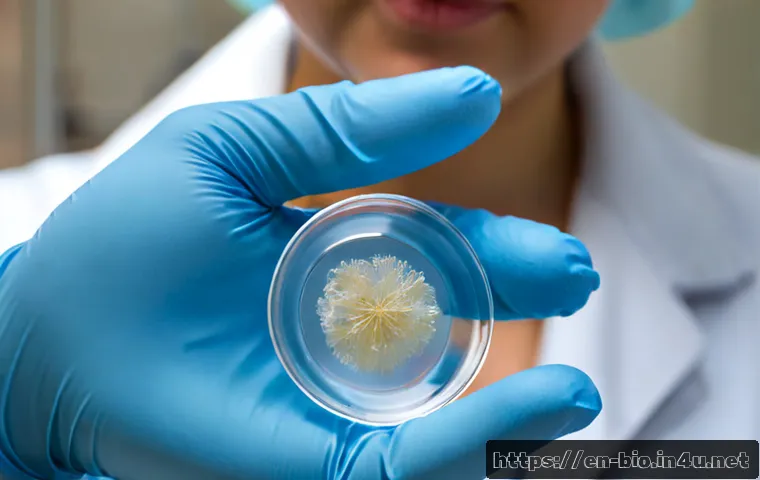
Tissue engineering is most useful when conventional cell culture cannot provide the structure, function, or controlled environment needed for a research or development decision. Standard culture may be sufficient for simpler cell-response questions, while scaffolds, bioreactors, organ-on-chip systems, and 3D bioprinting can justify added complexity when tissue architecture or dynamic conditions matter. The right platform depends on the intended biological function, cell source, material compatibility, and validation expectations. Equipment purchases should be evaluated alongside operating burden, training, consumables, and repeatability needs. For many teams, an external CRO, CDMO, or specialist development partner can be a practical route when advanced infrastructure is not yet justified in-house. A clear project brief makes vendor discussions and platform comparisons more productive.
At a Glance
- Conventional cell culture can be enough when a project does not require tissue-like architecture, controlled flow, or mechanical stimulation.
- Scaffolds, bioreactors, organ-on-chip platforms, and 3D bioprinting address different technical questions rather than serving as interchangeable upgrades.
- Total project cost depends on cells, biomaterials, equipment access, analytical testing, batch needs, and whether work is performed internally or externally.
| Technology Path | Best-Fit Use Case | Core Requirements | Validation Burden | Outsourcing Fit |
|---|---|---|---|---|
| Scaffold-based culture | Structured tissue constructs and material studies | Cells, scaffold material, controlled culture workflow | Material-cell compatibility and repeatability | Suitable when material expertise or specialized testing is limited |
| 3D bioprinting | Spatial placement of cells and biomaterials | Bioprinting system, bioink workflow, print development | Printability, cell viability, construct consistency | Useful for teams without established printer access or method-development staff |
| Bioreactor-supported culture | Perfusion, oxygenation, mechanical loading, or stimulation | Bioreactor equipment, monitoring, operating procedures | Controlled-condition performance and reproducibility | Suitable for projects needing specialized dynamic culture capability |
| Organ-on-chip | Disease modeling, drug testing, and advanced in vitro models | Microphysiological platform, cells, defined assay workflow | Functional relevance and assay consistency | Often practical for focused studies or early platform assessment |
What Tissue Engineering Is Designed to Solve
The role of cells, scaffolds, signaling, and culture conditions
Tissue engineering commonly combines living cells, scaffold materials, signaling factors, and controlled culture conditions to create functional tissue constructs. The goal is not simply to grow more cells. It is to create an environment that supports a relevant biological structure or function.
Scaffolds can be natural, synthetic, decellularized, or hybrid. Their selection is influenced by biocompatibility, degradation behavior, mechanical properties, and manufacturing needs. A scaffold that is easy to handle in an early laboratory study may still require further work before it fits a repeatable development workflow.
Research models versus regenerative and clinical-development applications
A research model may be designed to answer a narrow question, such as how cells behave in a particular material environment. A regenerative medicine or reconstructive application generally involves broader expectations around quality systems, reproducibility testing, safety assessment, and regulatory planning.
That difference should shape platform selection early. A technically impressive prototype is not automatically a practical path toward clinical development. Teams should define whether the immediate objective is discovery, disease modeling, drug testing, or a translational product program.
When conventional cell culture may be enough
Conventional cell culture may be sufficient when the key decision concerns basic cell response and does not require three-dimensional architecture, flow, mechanical loading, or tissue-level organization. Starting with the least complex model that can answer the research question can reduce unnecessary equipment and biomaterial spending.
Advanced platforms become more relevant when static culture cannot represent the conditions needed for the decision at hand. The reason to add complexity should be explicit, testable, and connected to the project objective.
Comparing the Main Technology Paths and Their Practical Value
Scaffold-based tissue constructs
Scaffold-based approaches provide a physical framework for cell attachment, growth, and tissue organization. They are often considered when material behavior and construct mechanics are central to the program. The practical challenge is that cell compatibility, degradation behavior, and mechanical fit may interact in ways that require early testing.
When reviewing biomaterials suppliers, look beyond material descriptions. Ask what information is available on handling, consistency, manufacturing considerations, and compatibility with the intended culture workflow.
3D bioprinting and bioink-based workflows
3D bioprinting can improve spatial control of cells and biomaterials. It may be valuable where geometry, layered placement, or construct organization affects the model. However, method development must balance printability and cell viability. A bioink that prints well is not automatically the best environment for the selected cells.
A bioprinting system should be assessed as a workflow rather than a standalone instrument. Consider material handling, cleaning procedures, operator training, bioink compatibility, cell-loading steps, and the validation needed to show repeatable output.
Bioreactors, perfusion systems, and mechanical stimulation
Bioreactors can provide controlled flow, mechanical loading, oxygenation, or stimulation that static systems may not provide. This can be important when a construct needs dynamic culture conditions to support the intended function or model behavior.
The added value comes with added operating complexity. A procurement decision should account for consumables, monitoring needs, laboratory procedures, staff capability, and the ability to reproduce culture conditions between runs.
Organ-on-chip and advanced in vitro tissue models
Organ-on-chip platforms and related advanced in vitro models can support disease modeling, drug testing, and research applications where a more controlled tissue environment is useful. They can be a focused option when the aim is to generate decision-relevant biological data rather than manufacture a tissue construct.
The key question is whether the model provides information that conventional culture cannot provide for the program. Teams should avoid adopting a complex platform simply because it is novel or commercially available.
Budget, Equipment, and Outsourcing Considerations
Cost drivers: cells, biomaterials, equipment, testing, and labor
Tissue engineering project costs vary substantially. Major drivers include cell source, scaffold complexity, laboratory equipment access, analytical testing, batch size, and labor. Quality requirements can also change the scale and type of work needed.
For an early research project, equipment access and small-scale workflow development may matter more than owning a complete platform. For translational work, reproducibility, documentation, material supply, and process control may become more important than initial purchase price.
In-house lab setup versus CRO, CDMO, or specialist development support
An in-house laboratory can provide direct control over experiments and faster iteration when the team has the required staff, facilities, and operating procedures. It can also create a continuing commitment to maintenance, training, consumables, and method standardization.
A CRO, CDMO, or specialist development partner may be appropriate when the project needs capabilities that are not available internally, such as specialized bioreactor workflows, biomaterial development, advanced analytical testing, or scale-up planning. External support does not remove the need for a clear technical brief; it makes that brief more important.
Questions to ask before requesting a vendor quote or project estimate
Before contacting a laboratory equipment vendor, biomaterials supplier, or development partner, define the tissue type, cell source, target function, current development stage, expected scale, and quality expectations. Ask which assumptions affect the proposed workflow and which steps require validation before a broader commitment.
It is also useful to ask what is included in the scope: materials, cell culture work, analytical testing, documentation, training, equipment service, and data review. A quote is easier to compare when the operating assumptions are visible.
Development Workflow, Validation, and Common Mistakes
Define the biological function before choosing a platform
Platform selection should start with the biological function the model or construct must support. For example, a team may need spatial organization, mechanical behavior, controlled perfusion, or a response suitable for drug testing. This decision should come before selecting a printer, scaffold, or bioreactor.
Technology should follow the decision requirement, not the other way around. This helps prevent expensive equipment choices that do not materially improve the program.

Test material-cell compatibility and repeatability early
Early work should test whether the chosen cells and materials work together under the intended culture conditions. For printed constructs, this includes attention to both printability and cell viability. For scaffold-based systems, it includes compatibility, handling, and consistency across runs.
Repeatability should not be treated as a late-stage concern. If a workflow cannot be carried out consistently at the research stage, it may be difficult to interpret results or move toward a more controlled development setting.
Avoiding premature scale-up and unsupported clinical claims
Moving from a laboratory prototype to clinical use generally requires more extensive quality systems, reproducibility testing, safety assessment, and regulatory planning. A laboratory result alone does not establish clinical suitability, regulatory classification, approval requirements, or commercialization timing.
Do not assume that a material, printer, cell line, or bioreactor is appropriate for a specific application without validation data and expert review. Scale-up assumptions should be tested rather than inferred from small-scale success.
Choosing an Approach for Different Project Goals
Academic research and disease-model development
Academic teams often benefit from choosing the simplest platform that produces meaningful data for the research question. Scaffold-based culture or an advanced in vitro model may be more appropriate than a full manufacturing-oriented workflow when the goal is mechanistic research or disease modeling.
Drug screening and toxicity testing programs
Drug testing programs may prioritize a model that produces consistent, decision-relevant biological responses. Organ-on-chip platforms, controlled tissue constructs, or bioreactor-supported models can be considered when static culture does not capture the required environment. The assay design and reproducibility requirements should remain central.
Early-stage biotech product development
Early-stage biotech teams should separate proof-of-concept needs from future manufacturing needs. Early experimentation may justify outsourced access to 3D bioprinting systems, specialized biomaterials, or bioreactor support before investing in a permanent internal platform.
At this stage, keep records that clarify what was used, how it was handled, and what conditions supported repeatable outcomes. Those details can reduce uncertainty when the program expands.
Translational teams planning for manufacturing and quality controls
Translational teams should consider materials supply, process consistency, analytical testing, documentation, and quality systems early. The platform may need to support not only biological performance but also a practical route to controlled production.
This is where CDMO discussions can be useful. Review whether a prospective partner understands the selected cells, biomaterials, construct format, and the validation work that may be needed before broader development.
Selection Criteria and Comparison Summary
Use this neutral checklist before selecting equipment vendors, biomaterials suppliers, or development partners:
- Decision fit: Does the platform answer the biological or development question that matters now?
- Cell and material compatibility: Is there a clear plan to test the intended cells, scaffold, bioink, and culture conditions together?
- Operating burden: Have training, consumables, maintenance, labor, and analytical testing been considered alongside equipment purchase price?
- Validation evidence: What data, documentation, and repeatability support are available for the intended workflow?
- Scale-up fit: Can the method be evaluated realistically for future batch, quality, and manufacturing needs?
- Service capability: Can the vendor or external partner support installation, method development, troubleshooting, and relevant technical review?
For equipment specifications, biomaterial handling information, or development scope details, review the relevant official product or service page before making a commitment.
Final Thoughts
Tissue engineering technologies are best compared by the decision they enable, not by their technical complexity alone. Scaffold-based workflows, 3D bioprinting, bioreactors, and organ-on-chip platforms each offer different value. The strongest selection process starts with biological function, tests compatibility early, and includes the full operating burden. When internal capability is limited, a focused outsourced development project can help clarify fit before a larger infrastructure investment.
Useful Information to Keep in Mind
Material choice affects more than structure. It can influence cell behavior, degradation, mechanics, handling, and manufacturing considerations.
Dynamic culture is not automatically necessary. Bioreactor and perfusion systems are most useful when controlled flow, oxygenation, loading, or stimulation is relevant to the project question.
A vendor quote needs context. A defined cell source, construct goal, workflow stage, and testing plan make estimates more meaningful.
Important Considerations
Total project cost cannot be determined without a defined tissue type, cell source, development stage, quality requirements, and production scale. The best platform for a particular disease, patient group, or clinical objective cannot be determined without validation data and expert review. Regulatory classification, approval expectations, and commercialization timelines also depend on the specific product and jurisdiction. This article provides a comparison framework, not a clinical, regulatory, or procurement determination.
Frequently Asked Questions
Q1. How much does tissue engineering technology cost for a research or startup project?
A1. Costs vary substantially based on cell source, scaffold complexity, equipment access, analytical testing, batch size, labor, and whether work is completed in-house or through an external partner. A useful estimate requires a defined tissue type, development stage, quality expectations, and production scale.
Q2. Is 3D bioprinting always the best choice for tissue engineering applications?
A2. No. 3D bioprinting can improve spatial control of cells and biomaterials, but it also requires careful method development to balance printability and cell viability. Scaffold-based culture, bioreactors, organ-on-chip systems, or conventional culture may be more suitable depending on the biological question.
Q3. When should a team outsource tissue engineering development instead of building an in-house lab?
A3. Outsourcing may be practical when a team lacks specialized equipment, biomaterial expertise, advanced testing capability, trained personnel, or a clear reason to maintain permanent infrastructure. A CRO, CDMO, or specialist partner should still receive a well-defined project brief covering cells, materials, target function, quality expectations, and planned scale.